The Oxford Illustrated History of the World by Felipe Fernández-Armesto
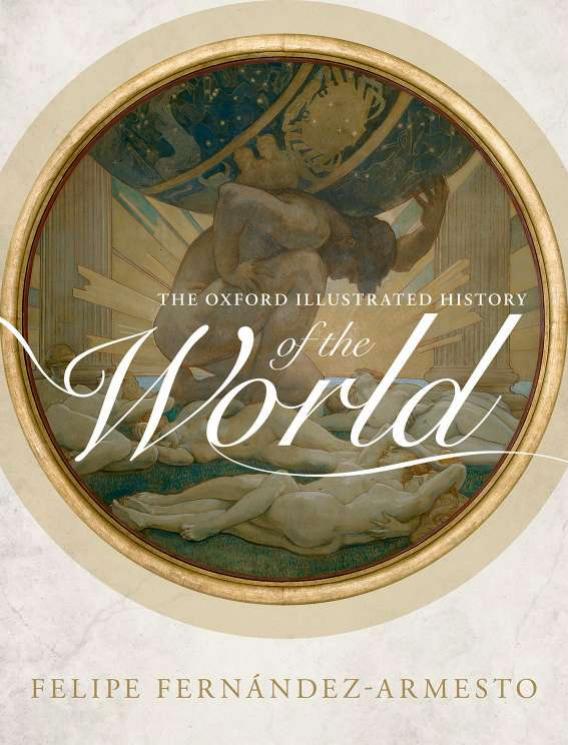
Author:Felipe Fernández-Armesto
Language: eng
Format: epub, pdf
ISBN: 9780191067204
Publisher: OUP Oxford
Published: 2018-09-30T16:00:00+00:00
a view of sixteenth-century calicut (kozhikode), the principal port of the Malabar Coast, known as the ‘City of Spices’. Indian and European ships as well as tame elephants are shown. From Georg Braun and Franz Hogenberg, Civitates orbis terrarum, Vol. 1 (Cologne, 1572), after an unidentified Portuguese drawing.
The VOC and EIC sought to establish strongholds by force, but could not escape the need to cultivate local trading partners. Initially, each established a headquarters east of the Portuguese base at Goa. The VOC gained a commercial advantage by using fixed winds and currents to create a fast route to their base at Batavia (now Jakarta). In addition to attacking their European rivals, they used force to establish strategic bases in the Moluccas (the Spice Islands). From there they moved to wrest both the spice trade and strategic ports from the Portuguese, gaining control over Malacca and Ceylon by mid-century. It was a big operation for the time: in 1690 the VOC was sending two hundred ships a year to trade in the East and employed 30,000 men. For its part the EIC established a base at Madras (now Chennai) in southeast India in 1639 and three decades later at Bombay (now Mumbai) on the west coast south of Gujarat, both outside the Mughal Empire. After several misadventures, the EIC was finally able to establish a fort at Calcutta (now Kolkata) in Mughal-ruled Bengal in 1690. The EIC and VOC cooperated at times to gain advantages over the Portuguese, but their commercial rivalry also led to armed conflict. Four hard-fought Anglo-Dutch Wars between 1652 and 1784 eventually gave the EIC the upper hand, and the Seven Years War (1756–63) limited any expansion by the French Company.
Traditionally, historians have focused on the Europeans’ role in promoting transoceanic trade that linked maritime Asia directly with European and American markets. But in volume and value, intra-Asian business far exceeded intercontinental exchanges in this period. Patterns of prices within Asia gave Europeans their main opportunities to profit. Silver and copper were relatively cheap in Japan but more valued in China, while Indians valued gold highly. Shipping charges and profits from other commodities could be invested in specie so as to take advantage of the differentials. The VOC’s biggest coup occurred in 1639, when Japan banned other Europeans, leaving the Dutch with privileged access to Japanese silver. To an extent specie from the Americas, especially from Spanish mining ventures in Mexico and Peru, helped Europeans fund operations in China and India.
Initially, the Europeans sought spices, specifically pepper from India and ‘fine spices’ such as cloves, nutmeg, and mace from the Moluccas, partly for export to Europe but chiefly for the huge Chinese market. The exotic spices had a higher profit margin, but popular demand for Asian pepper in Europe became enormous, some 3.4 million kg a year in the first third of the eighteenth century. Unexpectedly, other goods became even more important. During the seventeenth century the value of Indian cotton-textile exports to the Atlantic came to surpass the spice trade.
Download
The Oxford Illustrated History of the World by Felipe Fernández-Armesto.pdf
This site does not store any files on its server. We only index and link to content provided by other sites. Please contact the content providers to delete copyright contents if any and email us, we'll remove relevant links or contents immediately.
| Africa | Americas |
| Arctic & Antarctica | Asia |
| Australia & Oceania | Europe |
| Middle East | Russia |
| United States | World |
| Ancient Civilizations | Military |
| Historical Study & Educational Resources |
Underground: A Human History of the Worlds Beneath Our Feet by Will Hunt(12097)
Sapiens by Yuval Noah Harari(5370)
Navigation and Map Reading by K Andrew(5156)
The Sympathizer by Viet Thanh Nguyen(4390)
Barron's AP Biology by Goldberg M.S. Deborah T(4150)
5 Steps to a 5 AP U.S. History, 2010-2011 Edition (5 Steps to a 5 on the Advanced Placement Examinations Series) by Armstrong Stephen(3733)
Three Women by Lisa Taddeo(3433)
Water by Ian Miller(3185)
The Comedians: Drunks, Thieves, Scoundrels, and the History of American Comedy by Nesteroff Kliph(3079)
Drugs Unlimited by Mike Power(2594)
A Short History of Drunkenness by Forsyth Mark(2297)
DarkMarket by Misha Glenny(2212)
And the Band Played On by Randy Shilts(2209)
The House of Government by Slezkine Yuri(2206)
The Library Book by Susan Orlean(2069)
Revived (Cat Patrick) by Cat Patrick(1991)
The Woman Who Smashed Codes by Jason Fagone(1973)
The Absolutely True Diary of a Part-Time Indian by Sherman Alexie(1913)
Birth by Tina Cassidy(1904)
